
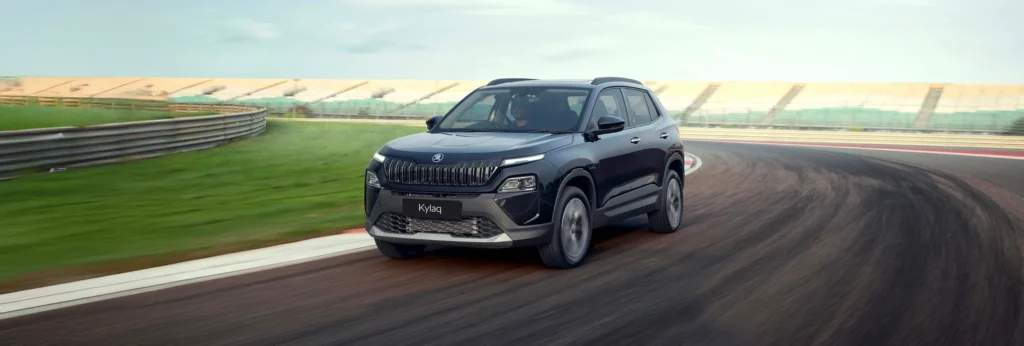
The Skoda Kylaq milestone of producing more than 50,000 units within just one year underscores the rapid success and growing demand for the sub-4-metre SUV in the Indian automotive market. Skoda Auto Volkswagen India Private Limited (SAVWIPL) announced this significant manufacturing achievement on January 27, 2026, reinforcing its commitment to domestic production, localisation and the Government of India’s Make in India initiative.
The Skoda Kylaq milestone not only highlights the strong performance of this compact SUV but also reflects broader trends in the industry where locally engineered products tailored to Indian customers are gaining traction. With retail sales totaling 46,872 units in 2025 alone, the Kylaq has played a pivotal role in Skoda’s growth story, contributing to a 36 % year-on-year increase in sales for the Group.
Also Read: 2026 Skoda Kylaq New Trims Launched in India – Classic+ & Prestige+ Expand Lineup
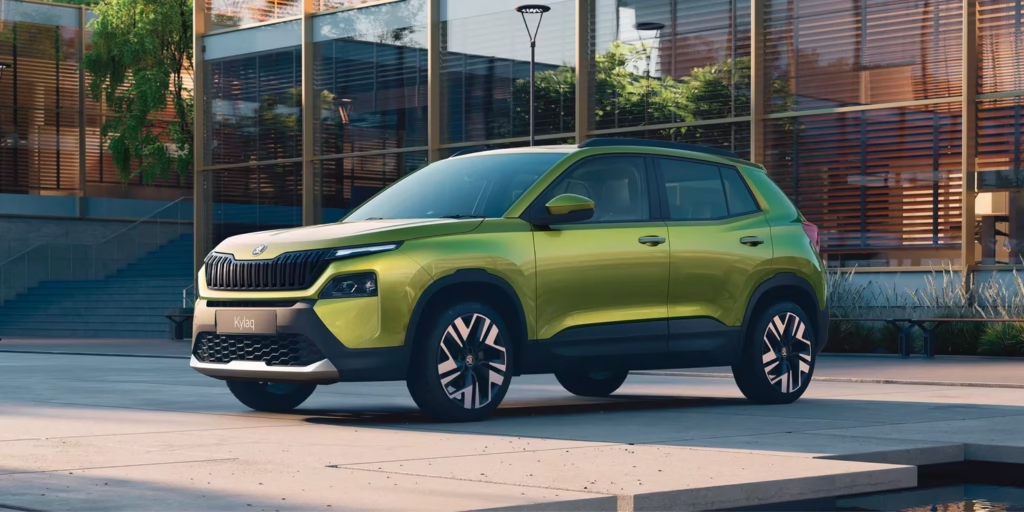
Skoda Kylaq Milestone – Production & Sales Snapshot
| Category | Data |
|---|---|
| Production Milestone | 50,000+ units |
| Time Taken | ~1 year (Dec 2024–Jan 2026) |
| Retail Sales in 2025 | 46,872 units |
| Average Monthly Sales (2025) | ~3,900 units |
| Plant | Chakan Manufacturing Facility (Maharashtra) |
| Platform | MQB-A0-IN |
Figures reflect cumulative production including units manufactured up to January 2026 and retail sales recorded through December 2025.
What the Skoda Kylaq Milestone Signifies
Reaching this Skoda Kylaq milestone within such a short time emphasises Skoda Auto Volkswagen India’s rapid scale-up of production and acceptance among Indian buyers. The Kylaq, which shares the MQB-A0-IN architecture with other successful models, was developed and engineered with a strong focus on Indian market needs — from size and features to driving dynamics.
According to the company, the Kylaq’s production success reflects the trust that customers have placed in Skoda’s products and the Group’s strategic focus on designing vehicles “in India, for India and global markets.” The 50,000-unit production landmark was greeted with commendations from both industry and government representatives.
Government, Leadership & Make in India Support
The celebration of the Skoda Kylaq milestone was marked by the presence of H. D. Kumaraswamy, Union Cabinet Minister of Heavy Industries and Minister of Steel, underlining the government’s support for domestic automotive manufacturing. His participation signalled recognition of the role that local production plays in strengthening India’s industrial base.
Piyush Arora, Managing Director and CEO of Skoda Auto Volkswagen India, emphasised that the model’s acceptance validates the Group’s strategic direction, including expanding localisation and building vehicles that resonate with Indian customers. According to Arora, the Kylaq’s performance highlights the importance of investing in local engineering and production capabilities.
Production Capacity Expansion & Localisation
Supporting this Skoda Kylaq milestone, SAVWIPL has increased production capacity at its Chakan plant by approximately 30 % to meet rising demand. The expansion reflects not only increased manufacturing throughput but also deeper engagements with domestic suppliers, reinforcing the brand’s long-term commitment to local value chains.
Localising more components helps reduce production costs and shorten supply lead times — benefits that are vital for competitive pricing and sustained demand. The milestone underscores how localisation, combined with market-specific engineering, can accelerate growth for global brands in India.
Also Read: 2026 Skoda Kushaq Facelift Revealed
Sales Trends Behind the Milestone
Although the Skoda Kylaq milestone marks 50,000 units produced, retail sales through 2025 stood at 46,872 units — an average of around 3,900 per month. The gap between production and sales figures follows from units produced and dispatched in early 2026, which are not reflected in 2025’s retail numbers.
This robust demand narrative is supported by consistent monthly sales growth and sustained interest across variants and trims. The Kylaq has been credited with boosting Skoda’s overall sales momentum and strengthening its competitive position in the compact SUV segment.
Positioning in the Compact SUV Segment
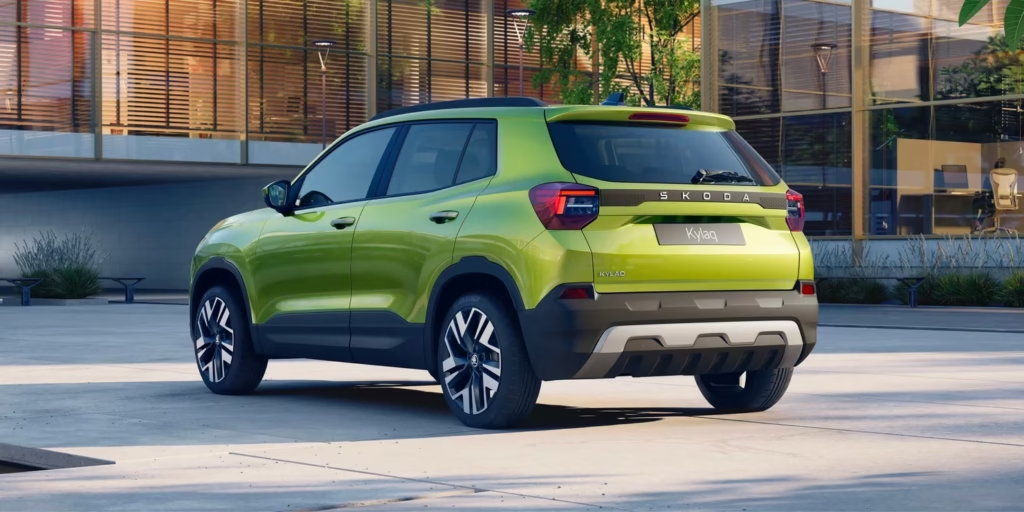
The Skoda Kylaq milestone comes at a time when competition in the sub-4-metre compact SUV category is intense. Models from rivals such as the Hyundai Venue, Kia Sonet, Tata Nexon, Mahindra 3XO and Maruti Suzuki Brezza dominate the segment. However, the Kylaq has carved out a niche by balancing European build quality with features, performance and localisation suitable for Indian buyers — contributing to its milestone achievement.
The SUV is powered by a 1.0-litre TSI turbo-petrol engine that produces around 115 PS and 178 Nm of torque, paired with choices of a 6-speed manual or 6-speed torque-converter automatic transmission.
Strategic Implications for Skoda Auto Volkswagen India
The Skoda Kylaq milestone strengthens Skoda Auto Volkswagen India’s strategic playbook in several ways:
1. Validation of Local Engineering
The Kylaq’s acceptance confirms that vehicles developed with local market requirements can deliver success, encouraging further India-specific product planning.
2. Strengthened Manufacturing Footprint
Expansion at the Chakan facility enhances capacity for the Kylaq and potential future models, supporting Skoda’s long-term production strategy.
3. Enhanced Supplier Ecosystem
Deeper supplier engagement and localisation contribute to resilience and cost efficiencies, supporting competitiveness against rivals.
These elements position Skoda strongly in the Indian automotive landscape and augment its readiness for future product launches and segment growth.
Also Read: Skoda Octavia RS and Kodiaq RS Launch Confirmed for 2026
What’s Next After the Milestone
With the Skoda Kylaq milestone achieved, industry expectations are high for the SUV’s continuing success into 2026. Skoda Auto Volkswagen India is expected to introduce additional variants that could further broaden buyer appeal and sustain production and sales momentum.
The achievements also lay the foundation for potential export initiatives, leveraging production scale and localisation to serve external markets in the future.